
Preparing with sight loss is often about preserving familiar arrangements. Moving everyday objects into a new emergency box can make them harder to find. Start by asking which routines already work and how they might be affected by an outage or evacuation.
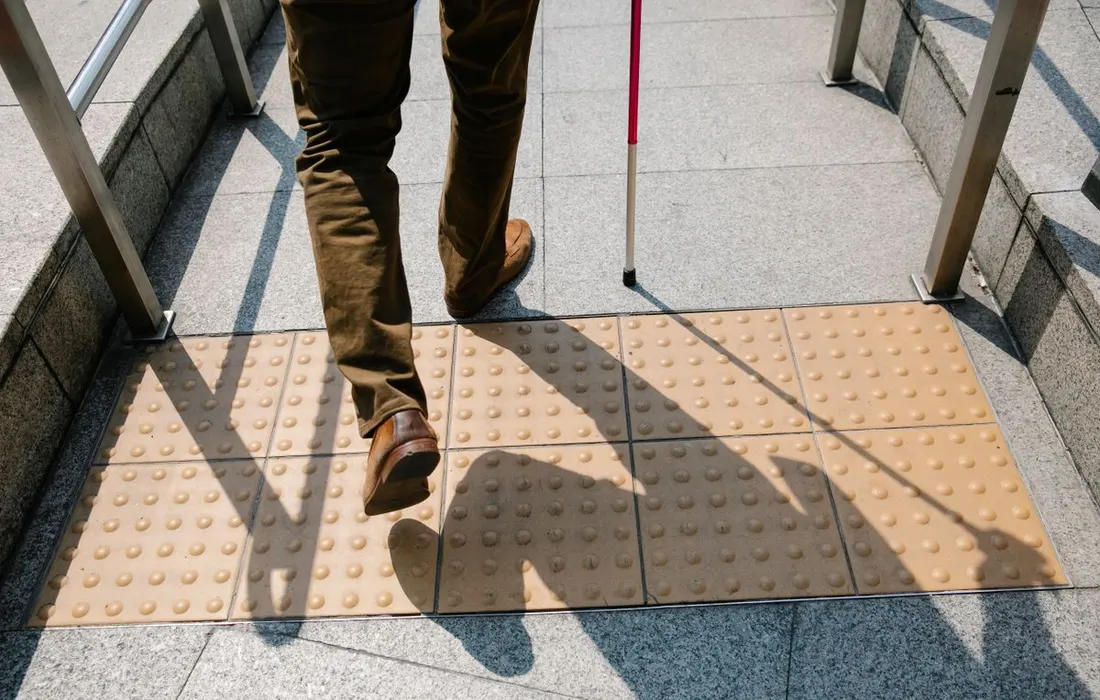
Keep important items in known places
Store mobility and communication aids where they are normally expected, and tell trusted helpers not to relocate them without agreement. Keep walking routes clear of extra stock or bags. Use tactile or high-contrast labels where useful, following the person's own preferences rather than creating an unfamiliar system during a warning.
- Check that stored water does not narrow a route.
Make the plan accessible without mains power
Choose a format you can use, such as large print, Braille or an accessible saved audio file. A digital copy is helpful but needs a charged device, so discuss an alternative if the battery fails. Record trusted contacts and the building's agreed emergency arrangements in the same accessible format.
- Practise finding the plan from its usual location.
Agree assistance clearly
Tell a chosen helper how you prefer to be guided and what equipment or assistance animal must come with you. Confirm transport and destination accessibility instead of assuming they will be suitable. If a route changes because of debris or flooding, follow official directions and ask for appropriate assistance rather than attempting an unfamiliar hazardous shortcut.
- Review the plan after changes to the home layout.
Reader comments
What has helped your household? Share practical experience or ask a question. No account or email needed.
Names are unverified. Comments are readers' views, not official advice. Please avoid personal details, medical instructions, promotions and conspiracy claims. Comment policy & privacy
Loading comments.
Leave a comment
Report a comment or request removal