
A first aid kit should be easy to find and contain supplies appropriate to its users. The Lifesystems Trek and Adventurer are personal outdoor kits, so the useful question is how each fits your home or day bag. This is a comparison of published specifications checked on 24 October 2026, not a clinical assessment or a hands-on product test.
Products to compare
Affiliate disclosure: As an Amazon Associate I earn from qualifying purchases. Amazon links below are paid links to specific product listings.
Lifesystems Trek First Aid Kit 1025
The smaller published footprint for a day bag where the listed contents match the intended needs.
Check the itemised contents and expiry dates; it is not a complete household or personal care plan.
Linked version: Trek 1025; check the supplied edition and contents.
View on Amazon.co.ukManufacturer detailsLifesystems Adventurer First Aid Kit 1030
A larger organised case with a different dressing and bandage selection.
Do not rank kits by item count or assume this personal outdoor kit meets a workplace requirement.
Linked version: Adventurer 1030; check the supplied edition and contents.
View on Amazon.co.ukManufacturer detailsSeparate the home cupboard from the day bag
Decide whether the purchase will stay at home, travel daily or serve both roles. Moving the only kit between locations can leave it unavailable when someone expects to find it. A small pouch of appropriate supplies in a day bag and a clearly located household kit may be more usable than one larger pack that constantly changes places.
The government Be Ready checklist includes first aid supplies alongside other household essentials. It also mentions items such as a thermometer and eyewash solution. Compare that guidance and your household circumstances with the actual contents below; neither outdoor kit should be assumed to include every item on a broader preparedness checklist.
Trek: check the smaller package
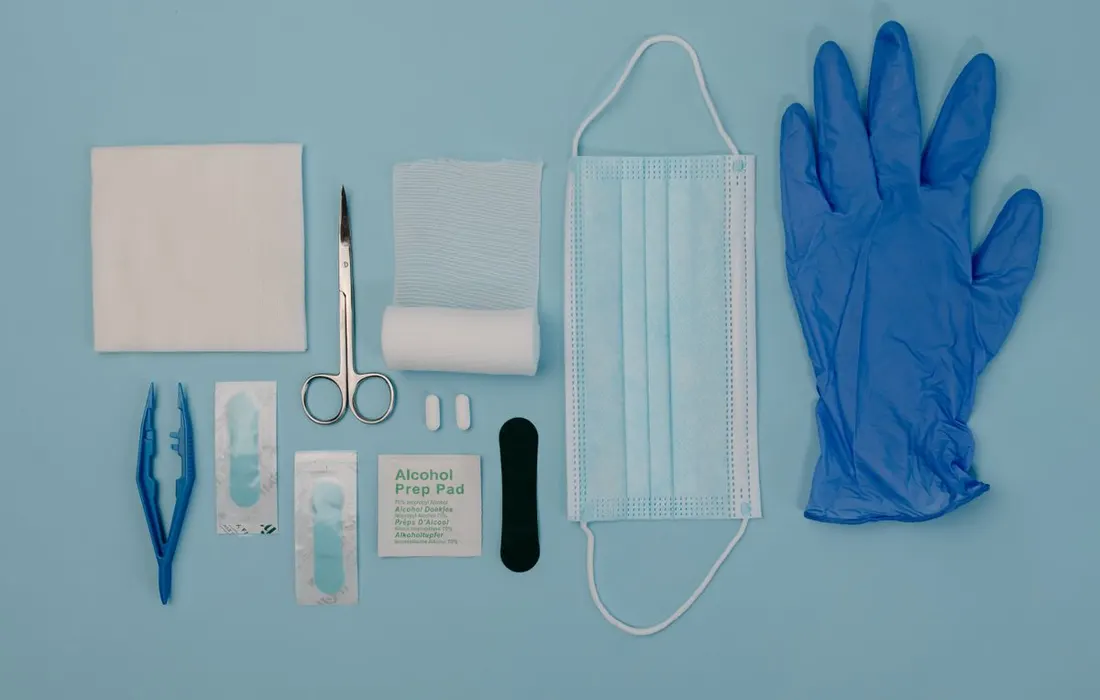
Lifesystems identifies the Trek as product code 1025 and lists 240 g, dimensions of 140 x 110 x 50 mm and 31 items. Its contents include scissors, tweezers, two pairs of nitrile gloves, assorted plasters, gauze, tape, bandages and several dressings. The stated list also includes blister plasters and a guidance leaflet.
That compact footprint is useful when a day bag already carries clothing, water and communication equipment. Check the actual pocket and the person carrying it before buying. A smaller package is only helpful if you can recognise and retrieve the required item without tipping everything onto a dirty or wet surface.
Adventurer: check what changes
The Adventurer, code 1030, is listed at 330 g and 150 x 130 x 80 mm, with 29 items. The manufacturer highlights its QuickFind organisation. Its published contents include a triangular bandage and a medium wound dressing, alongside supplies shared with the Trek. The wipe and dressing quantities differ too.
The lower headline item count does not make this a smaller or less suitable kit: the contents and packaging are different. Equally, a bigger case does not prove that it covers your household needs. Compare the current itemised lists rather than treating 29 versus 31 as a ranking or assuming a product name establishes the number of people it supports.
Inspect, maintain and learn
When a kit arrives, check it against the supplied list, inspect sealed packaging and record relevant expiry dates without opening sterile items unnecessarily. St John Ambulance advises replacing used or expired supplies and checking the kit regularly. Keep the contents list with the pack so replenishment is based on what is missing rather than another complete bundle.
Follow storage instructions and protect supplies from damaging conditions. Do not assume an ordinary zip makes either complete kit waterproof. If water exposure is likely, plan suitable additional protection without making the contents difficult to reach. Keep personal medicines and specialist medical equipment within the appropriate professional care arrangements; neither kit replaces them.
Spend on the gap you actually have
An existing clean, organised case with suitable in-date supplies may be cheaper to maintain than replacing it. If choosing between these models, the Trek has the smaller published dimensions; the Adventurer offers a different layout and contents mix. Choose the one that fits the intended location and identified needs. Suitable first aid learning is a separate practical investment: owning scissors or a dressing does not teach its correct use, and a leaflet cannot replace appropriate emergency help.
Amazon listings may describe an older edition with different weights or contents. Match the model code, ask the seller for the supplied contents list and inspect the received kit rather than assuming every offer matches the current manufacturer figures above.
Reader comments
What has helped your household? Share practical experience or ask a question. No account or email needed.
Names are unverified. Comments are readers' views, not official advice. Please avoid personal details, medical instructions, promotions and conspiracy claims. Comment policy & privacy
Loading comments.
Leave a comment
Report a comment or request removal