
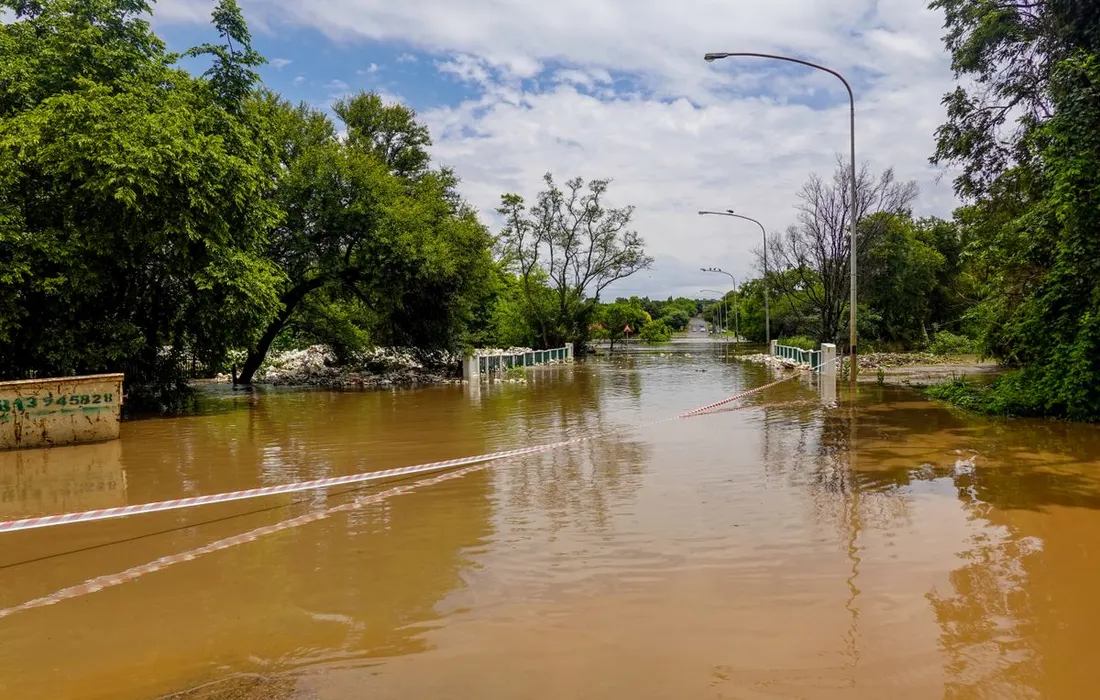
A familiar road can hide unfamiliar hazards beneath floodwater. Do not use walking, cycling or driving as a way to judge whether it is passable, even if another person appears to get through.
Recognise what cannot be seen
Water can conceal missing covers, damaged surfaces, debris and contamination. Its appearance does not give a reliable measure of depth, current or the condition of the road. A photograph or another driver's account may describe an earlier moment. Treat a closure as a safety instruction, not a challenge to verify.
- Stop before entering the water.
- Keep children and pets away from flooded routes.
Make delay part of the plan
Allow for postponing a journey, waiting in a safe location or using an officially open alternative. Tell work, school or the person expecting you that you cannot safely continue. A planned delay is easier to manage when essential medicines, a charged phone and basic personal supplies are with you.
- Use official road and transport information.
- Do not follow a navigation app past a closure.
Seek appropriate help
If water leaves you or someone else in immediate danger, contact emergency services and explain the location clearly. Do not enter floodwater to attempt a rescue or retrieve a vehicle. If a route repeatedly floods, report it through the local authority's normal process in safe conditions so future plans can account for it.
- Share verified closure information with its source.
- Recheck before the return journey.
Reader comments
What has helped your household? Share practical experience or ask a question. No account or email needed.
Names are unverified. Comments are readers' views, not official advice. Please avoid personal details, medical instructions, promotions and conspiracy claims. Comment policy & privacy
Loading comments.
Leave a comment
Report a comment or request removal